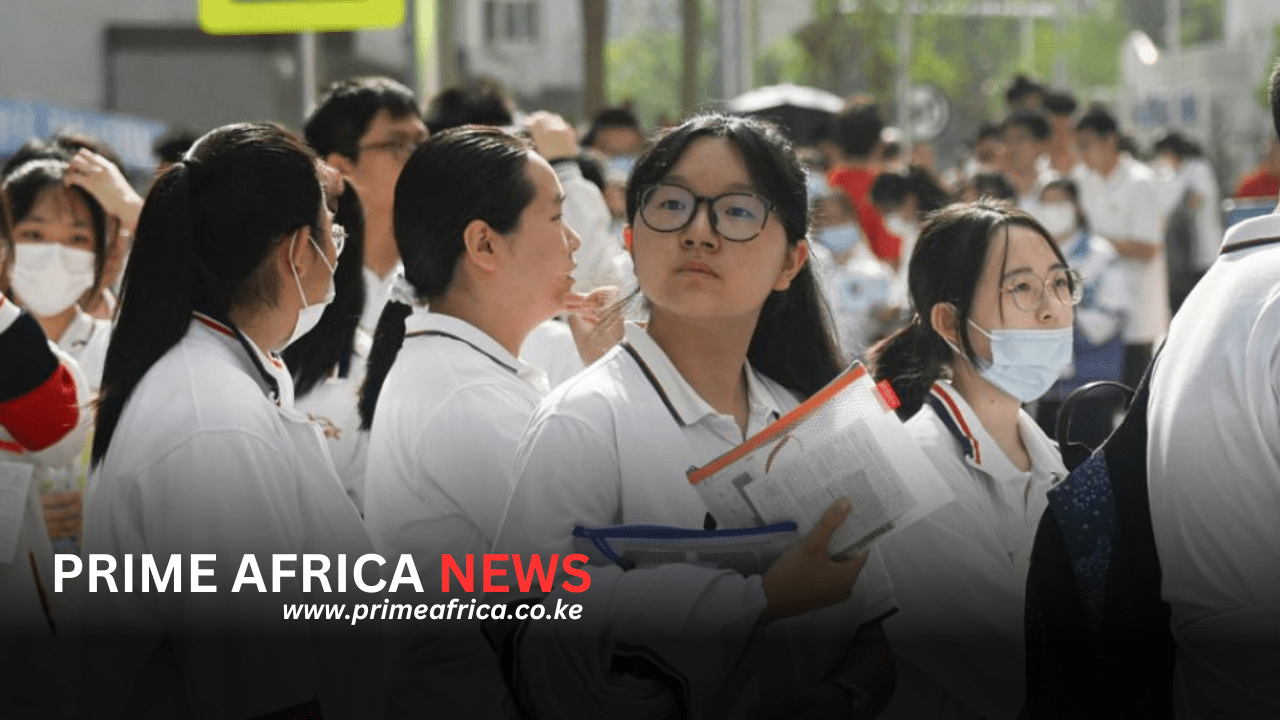

BEIJING — In a move that has sent shockwaves through the global academic and creative communities, several of China’s leading universities have announced the discontinuation of numerous arts and humanities degrees. The institutions cite the rapid advancement of artificial intelligence (AI) as the primary driver, arguing that traditional roles in these fields are being fundamentally reshaped or rendered obsolete by automation.
[spacer height=”20px”]
The restructuring, which includes the scrapping of majors such as English translation, photography, illustration, and fashion design, marks one of the first large-scale institutional shifts to formally deprecate creative disciplines in favor of an AI-integrated curriculum.
The decision is closely aligned with a broader government directive to steer the nation’s 12 million annual graduates toward industries considered critical to the country’s economic and technological future. These include robotics, semiconductors, and advanced artificial intelligence.
At the Communication University of China, top officials clarified that traditional photography and translation can no longer exist as independent four-year disciplines. “Today, everyone can be a self-media creator and recorder,” noted Liao Xiangzhong, a university official, during the annual political meetings in Beijing. He added that maintaining traditional language translation programs in the age of near-perfect AI accuracy is a “huge waste of national resources.”
Rather than eliminating the arts entirely, universities are pivoting toward “human-machine cooperation.” Institutions like the China Academy of Art are launching hybrid programs, such as “intelligent imaging art” and “AI audiovisual creation,” which require students to master generative tools alongside traditional creative theory.
[spacer height=”20px”]
New professional roles are already emerging from this shift. Prompt engineers and AI animators are now in high demand in the film and animation sectors. Industry experts note that tasks which previously took a month—such as character design or scene rendering—can now be completed in a fraction of the time, allowing creators to focus on high-level conceptual work.
Despite the efficiency of algorithms, many within the industry argue that the soul of the creative process cannot be automated. Alex Sh, a translation professional featured in a recent Al Jazeera report, emphasized that while AI can achieve near-perfection in accuracy, it lacks the “personal style” and emotional nuance essential to human communication.
[spacer height=”20px”]
“We are in an ever-changing period of human history,” Sh said. “We just have to be ready. It’s not those days anymore where we can put all of our eggs in one basket.”
[spacer height=”20px”]
As the global labor market continues to grapple with the AI revolution, China’s aggressive academic overhaul serves as a significant case study in how nations may choose to prioritize technical literacy over traditional humanities to remain competitive in an automated world.
[spacer height=”20px”]
About The Author