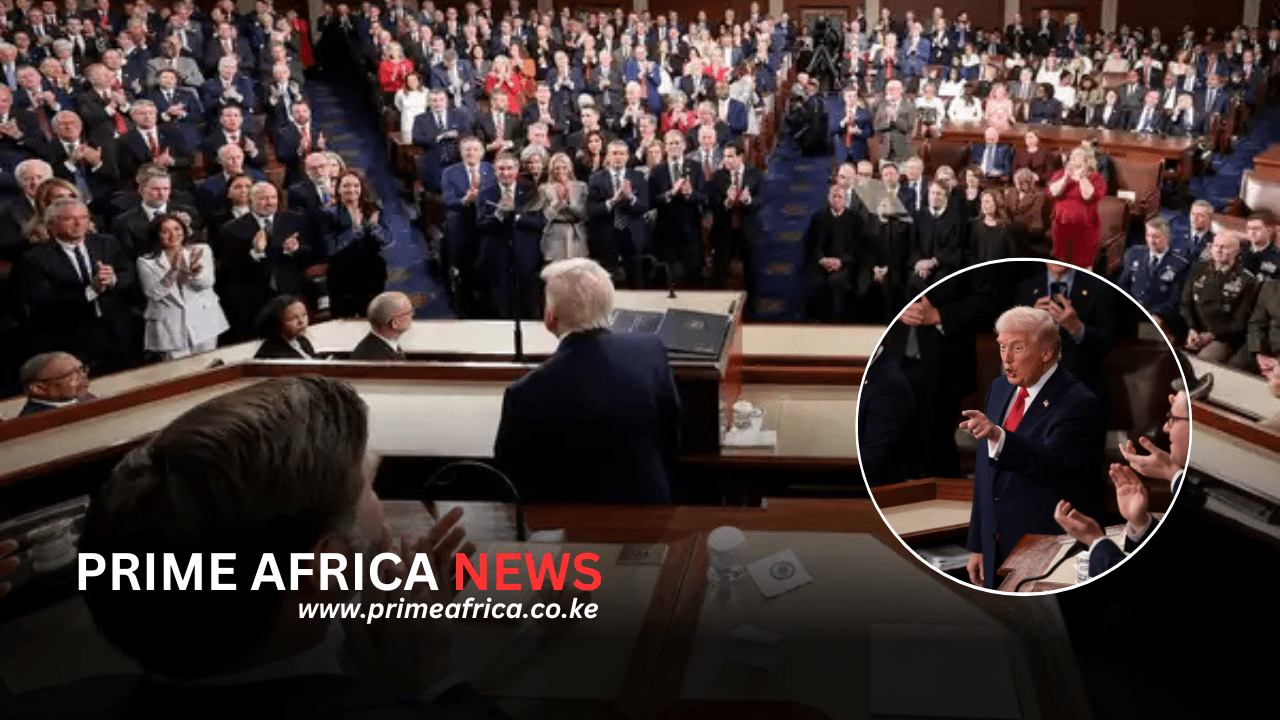

In his latest State of the Union address, Donald Trump declared a “turnaround for the ages,” portraying his second term as a period of national recovery and renewed strength ahead of the 2026 midterm elections. The address drew sharp partisan reactions, with Republicans applauding repeatedly while Democrats remained seated, some visibly dissenting.
However, a closer examination of several key claims reveals significant discrepancies between rhetoric and verified data.
Election Fraud Claims: “Cheating is rampant”
President Trump urged lawmakers to pass the SAVE America Act, which would require proof of citizenship to vote, reiterating his claim that election cheating is widespread.
Fact Check:
Voting by non-citizens in federal elections is already illegal. According to the non-partisan Center for Election Innovation and Research (CEIR), documented cases of non-citizens voting are extremely rare and typically detected and prosecuted.
A CEIR review in Michigan found 16 apparent non-citizen votes out of millions cast in 2024—about 0.00028% of ballots.
Conclusion: Isolated incidents exist, but there is no evidence of widespread fraud.
Medicaid Protection vs. Proposed Cuts
Trump pledged to “always protect” Medicaid, the federal health insurance program for low-income Americans.
Fact Check:
Independent analyses indicate that his flagship tax legislation, dubbed the One Big Beautiful Bill Act, would reduce federal Medicaid spending by an estimated $793 billion over the next decade, potentially leaving 7.8 million people without coverage.
Conclusion: The promise to protect Medicaid conflicts with projected funding reductions.
Crime in Washington, DC
While announcing 2028 Summer Olympics in Los Angeles, Trump asserted that Washington, DC is now safer than ever, claiming murders were “down close to 100%.”
Fact Check:
Metropolitan Police Department data shows homicides are down 67%, not nearly 100%. Additionally, reports indicate violent crime trends were already declining prior to federal troop deployments.
Conclusion: Crime has decreased, but the scale of reduction was overstated.
Energy Prices and Utility Costs
Trump claimed gasoline prices had fallen below $2.30 in many states and suggested overall energy costs were dropping.
Fact Check:
National data shows average household energy bills rose 6.7% between 2024 and 2025, with utilities seeking at least $92 billion in rate increases, affecting millions of customers. Analysts also warn that reduced clean energy investment could raise electricity costs by up to 18%.
Conclusion: While localized gas prices may vary, overall household energy costs have increased.
Foreign Policy Claims: Thailand–Cambodia Ceasefire
Trump cited a ceasefire between Thailand and Cambodia as evidence of diplomatic success.
Fact Check:
The truce collapsed within weeks in November, with renewed fighting displacing nearly half a million people. The territorial dispute remains unresolved.
Conclusion: The ceasefire was temporary and did not produce lasting peace.
Trump also reiterated claims of brokering peace between India and Pakistan—an assertion New Delhi has repeatedly denied.
Immigration and Crime Narrative
During the address, Trump introduced the mother of a Ukrainian woman murdered in North Carolina, describing the suspect as a criminal who entered through “open borders.”
Fact Check:
The suspect, Decarlos Brown Jr., is a U.S. citizen, contradicting claims that the crime was committed by an undocumented immigrant. Studies consistently show U.S.-born citizens are more likely to be arrested for violent and drug-related crimes than undocumented immigrants.
Conclusion: The case does not support claims linking immigration to violent crime.
A Divided Response Ahead of Midterms
Trump’s address underscores the deeply polarized political climate in the United States as the 2026 midterms approach. While supporters hail his policies as transformative, fact-checks suggest several claims were exaggerated or contradicted by available data.
For voters and observers alike, the speech highlights the growing importance of independent verification in an era of highly contested political narratives.
About The Author