


Kajiado County – The Kenyan government is intensifying efforts to address the rising number of human-wildlife conflict (HWC) cases, with a renewed focus on timely reporting, accurate documentation, and efficient compensation processes
[spacer height=”20px”].
In a statement issued by Kenya Wildlife Service (KWS) Director General Erustus Kanga, victims of wildlife attacks are urged to promptly report incidents either at KWS offices or through the State Department of Wildlife, which oversees the compensation process.
[spacer height=”20px”].
“There is a need for quick reporting of cases of wildlife attacks, and proper documentation to facilitate effective processing of compensation,” said Kanga.
[spacer height=”20px”].
He emphasized that verified claims from victims are essential to enable the disbursement of funds. The national compensation program, managed by the State Department of Wildlife, aims to ensure that those affected by wildlife-related deaths, injuries, or property loss receive the support they are entitled to.
[spacer height=”20px”].
|
|
As part of these efforts, the government has so far disbursed a total of KShs 3.8 billion in compensation since 2023. Notably, Kajiado County, a known hotspot for HWC, received KShs 64,126,000 on May 12, according to officials who spoke during a public engagement forum in Isara, Kajiado. |
[spacer height=”20px”].
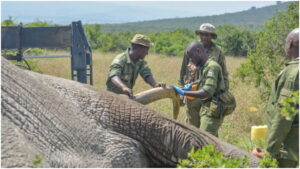
Kanga highlighted that HWC is not just a conservation challenge, but a national priority, especially in regions with high wildlife activity such as Kajiado, Taita Taveta, Narok, Laikipia, Meru, Kwale, Baringo, Kitui, and Isiolo. These areas often lie along critical wildlife corridors, increasing the likelihood of human-wildlife interactions.
[spacer height=”20px”].
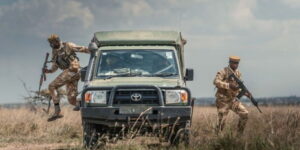
To mitigate these threats, KWS has rolled out several interventions:
-
Rapid response teams to manage emergencies
-
Erection of electric fences to keep wildlife out of human settlements
-
Installation of predator deterrent lights to reduce attacks on livestock
[spacer height=”20px”].
[spacer height=”20px”].
In addition to conflict mitigation, KWS is actively supporting local communities with initiatives such as:
-
Building water pans to reduce competition over water sources
-
Providing bursaries and classroom infrastructure
-
Fencing schools to enhance safety for students
[spacer height=”20px”].
“Victims of human-wildlife conflict are encouraged to reach out to the State Department of Wildlife to follow up on their compensation claims and receive the support that is available under the ongoing national program,” Kanga added.
[spacer height=”20px”].
He called on communities living near wildlife habitats, as well as other stakeholders, to collaborate in creating sustainable coexistence solutions that balance the needs of both people and wildlife.
About The Author
