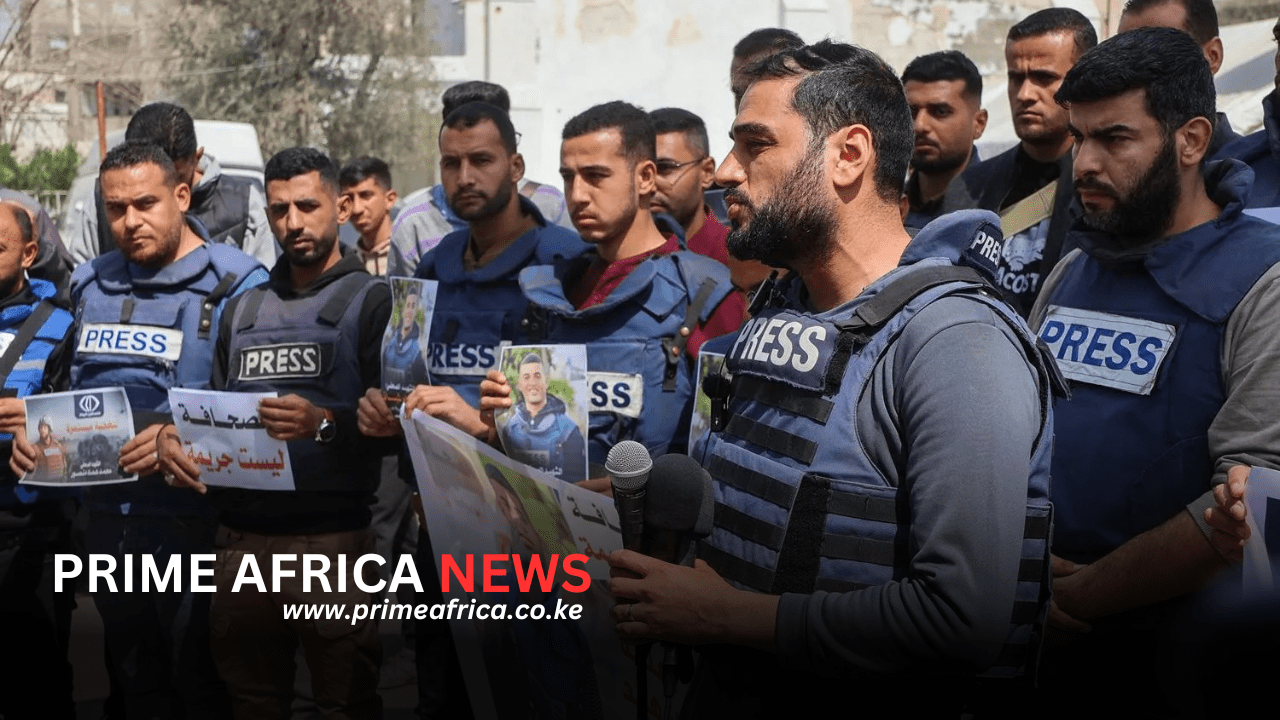

The Palestinian Journalists Syndicate, alongside its European branch, has strongly condemned the decision by the European Broadcasting Union (EBU) to host a conference titled “The Future of Journalism in Gaza” without the inclusion of Palestinian media representatives.
In a sharply worded statement, the syndicate expressed “deep concern and shock” over what it described as a deliberate exclusion of key Palestinian stakeholders, including the Palestinian Journalists Syndicate itself, the Publishers Association, the Palestinian Broadcasters Association, and other media institutions operating within Palestine.
The syndicate criticized the move as a continuation of a long-standing pattern of discussing Palestinian issues without Palestinian participation.
“This reflects an exclusionary and paternalistic mindset that treats Palestinians as subjects of discussion rather than partners in shaping their own future,” the statement read.
It emphasized that any conversation about rebuilding or shaping the future of Gaza’s media landscape is “politically, ethically, and professionally unacceptable” unless Palestinian journalists are at the center of such efforts.
Al Jazeera Journalist Killed in Gaza Airstrike as Global Outrage Over Targeting of Media Intensifies
The union further questioned the EBU’s intentions, suggesting the conference may be an attempt to deflect criticism over its controversial decision to allow Israel’s public broadcaster, Makan, to participate in the upcoming Eurovision Song Contest 2026.
According to the statement, the move appears to be a public relations strategy aimed at portraying concern for Palestinian media issues while excluding Palestinian voices from meaningful engagement.
The controversy has also sparked reactions across Europe. Public broadcasters from Ireland, Spain, Iceland, Netherlands, and Slovenia have announced their boycott of the Eurovision contest.
The Palestinian Journalists Syndicate welcomed the boycott, describing it as “an ethical stance reflecting a genuine commitment to accountability.”
The syndicate also condemned the inclusion of Makan, alleging that it operates within a broader Israeli media system accused of obscuring war crimes in Gaza. It argued that allowing participation in Eurovision grants undue legitimacy to institutions allegedly complicit in covering up violations against Palestinians.
In its concluding remarks, the syndicate outlined several key demands:
- A complete rejection of initiatives addressing Palestinian media without direct Palestinian participation
- Recognition of Palestinian journalists’ right to lead the reconstruction of their media sector
- A public review by the EBU of its policies and ethical responsibilities
- Immediate international intervention to protect Palestinian journalists and hold perpetrators accountable
The statement has been echoed by journalists and press freedom advocates worldwide, including Bill Otieno, who condemned what they termed as deliberate targeting and marginalization of journalists in conflict zones.
Advocates warned that continued exclusion and lack of protection for journalists not only undermines press freedom but also erodes global accountability mechanisms during times of war.
About The Author